A white cargo van with a company logo pulls out of a Bakersfield neighborhood and clips a car at the intersection. Who is liable for a delivery truck accident like that used to have a simple answer. It does not anymore, and a delivery van accident lawyer now has to untangle a corporate structure before the claim gets off the ground.
At the Law Offices of Mickey Fine, we have watched this shift happen across Kern County as e-commerce delivery volume climbed. An Amazon delivery accident claim now looks nothing like a typical two-car crash file. This post breaks down how liability works for an Amazon delivery van, a FedEx Ground van, a UPS truck, and everything in between.
Key Takeaways:
- Amazon delivery vans are typically operated by independent contracting companies called Delivery Service Partners, which hire and manage their own drivers rather than Amazon doing so directly.
- Amazon Flex drivers use their own personal vehicles, which creates separate insurance questions from the branded van model.
- UPS drivers are direct employees, which generally makes a liability claim more straightforward than one involving a contracted delivery company.
- California's ABC test for worker classification can affect whether a driver is legally treated as an employee or an independent contractor.
- Liability can reach beyond the driver to the vehicle owner, the contracting company, or the parent brand, depending on how much control each party exercised.
Why Delivery Van Crashes Are Different From a Standard Car Accident Claim
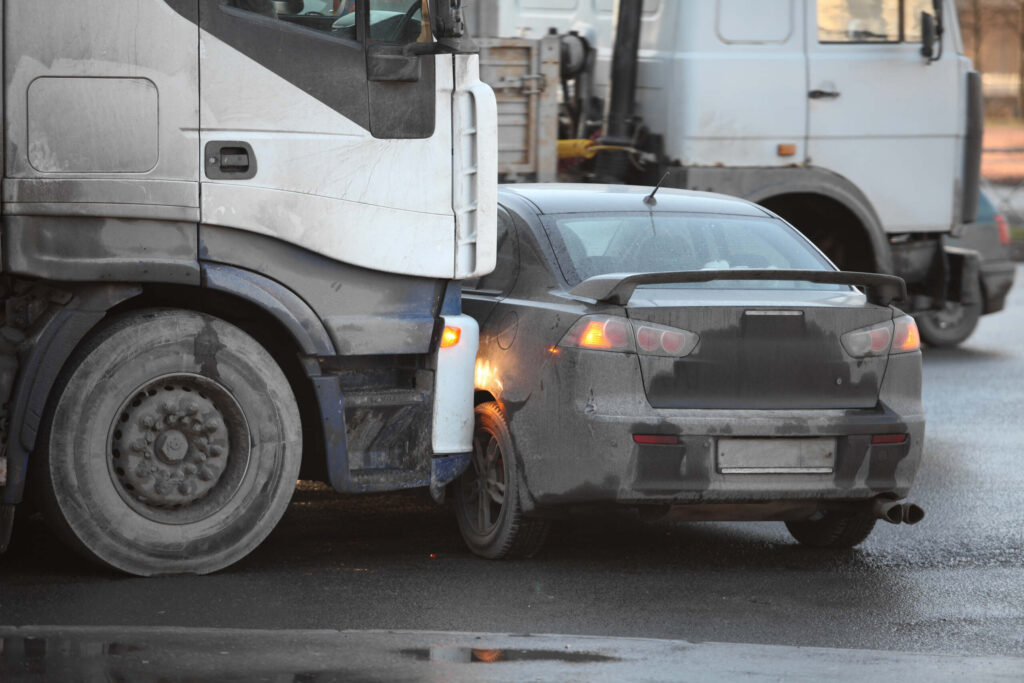
A crash with an ordinary passenger car usually involves just one driver and one insurance policy to sort through. Delivery driver accident liability works very differently, since it often involves a driver, a contracting company that employs the driver, a parent brand whose logo is on the van, and sometimes a completely separate vehicle owner, each with its own insurance and its own argument about who was actually in control.
Most last-mile delivery vans sit below the weight thresholds that bring the semi trucks and box trucks of a familiar trucking case into the federal safety framework. Federal Motor Carrier Safety Administration rules apply to vehicles with a gross vehicle weight rating of 10,001 pounds or more used in interstate commerce, and many branded delivery vans fall under that line.
A commercial driver's license is a separate and much higher threshold, generally 26,001 pounds. A typical delivery van driver needs neither a CDL nor the federal inspection and hours of service paperwork that follows a loaded tractor-trailer.
That does not mean these crashes are simple. It means the relevant rules come from state liability law and employment classification rather than federal trucking regulations.
That shift matters practically. A crash involving a semi truck usually comes with a driver qualification file, weigh station records, and hours of service data built into the case from the start. A delivery van crash instead turns on contracts, corporate structure, and how much operational control a parent brand actually exercises over a company that technically operates as its own business.
How Amazon's Delivery Service Partner Model Works
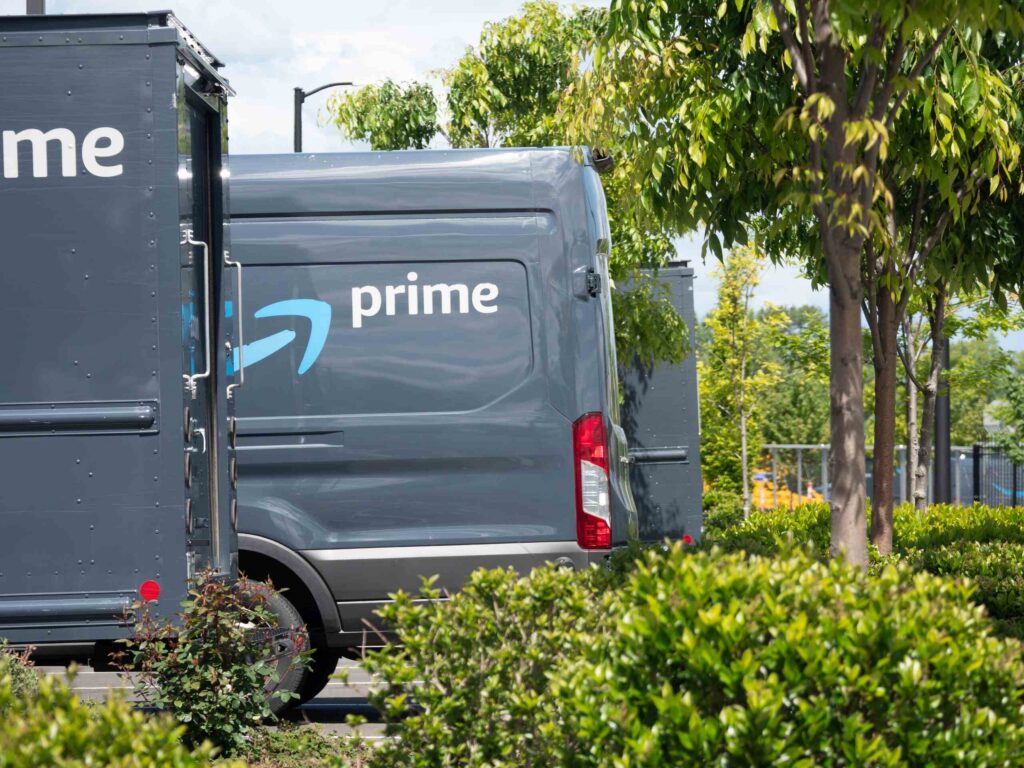
Amazon does not employ most of the drivers delivering its packages. Instead, Amazon contracts with thousands of small businesses called Delivery Service Partners, each a separate company that hires its own drivers, leases or owns the branded vans, and carries its own commercial liability coverage under Amazon's contracting requirements.
On paper, this structure keeps Amazon at arm's length from any single delivery driver. In practice, Amazon sets much of how these companies operate day to day, including routes, package quotas, driver training modules, van branding, and real-time performance monitoring through its own apps.
That level of control has become the central question in delivery crash litigation nationwide. Courts in several states have allowed injury claims against Amazon itself to move past early dismissal once evidence of that control came out.
The contracting company's insurance policy is often the first line of coverage. It is not always the last word on who ultimately pays.
Amazon's contracts with these delivery companies typically require the contracting company to defend and indemnify Amazon in litigation. That allocation is why a claim against Amazon usually begins as a dispute about control rather than about the crash itself.
How those disputes come out has varied, and it turns heavily on how much documented control the parent brand exercised over the specific driver and route involved.
What About Amazon Flex Drivers Using Their Own Cars?
Amazon Flex operates on an entirely different model from the branded delivery van. Flex drivers sign up through an app, choose delivery blocks, and use their own personal vehicles rather than a company-owned or leased van, which raises a different set of insurance questions than a crash involving a Delivery Service Partner.
A standard personal auto policy often excludes commercial use, which can leave a coverage gap exactly when a Flex driver causes a crash while delivering. Amazon has said it provides contingent coverage during active delivery blocks, similar in concept to the layered coverage rideshare companies use.
The scope and limits of that coverage are far less clear than a Delivery Service Partner's required policy. Sorting out which policy responds, and in what order, is often the first real hurdle in a Flex claim.
The gig structure behind Flex raises its own version of the control question that runs through the DSP model. Amazon does not own the vehicle, does not employ the driver in a traditional sense, and points to the driver's freedom to choose when to work.
At the same time, the app sets delivery orders, timing windows, and destinations. That gap between the contract label and the day-to-day reality is what becomes central once a Flex crash moves toward litigation.
FedEx Ground vs. UPS: Why the Logo on the Van Matters
The color of the van tells you a lot about who is likely responsible. UPS drivers are generally direct employees of UPS, which means a standard vicarious liability claim against the company applies in a fairly straightforward way when a UPS driver causes a crash on the job.
FedEx Ground operates differently. Routes are run by Independent Service Providers, separate contracting companies that hire their own drivers, own or lease the trucks, and carry their own commercial insurance. The drivers themselves are typically W-2 employees of the ISP rather than of FedEx directly, which means a claim usually starts against the local contracting company rather than the parent corporation.
FedEx has faced significant litigation over this structure. A Ninth Circuit ruling found that certain FedEx Ground drivers in California had been misclassified as independent contractors under the standard that applied at the time, which pushed the company toward the ISP model it uses now.
FedEx Express, the division handling overnight and priority shipments, generally uses direct employee drivers similar to UPS rather than the ISP contracting structure used by FedEx Ground. This means the FedEx logo alone does not answer the liability question, and confirming which FedEx division actually operated the specific van involved in a crash is an early step worth getting right before assuming which entity to pursue.
Does California's Independent Contractor Test Affect These Cases?
Yes, and it can matter more than the label on a contract. California Labor Code Section 2775 presumes a worker is an employee rather than an independent contractor unless the hiring company proves all three prongs of what is commonly called the ABC test.
The three prongs are freedom from the hiring company's control, work performed outside the company's usual course of business, and a worker customarily engaged in an independently established trade. The second prong is a real problem for a business built entirely around delivering packages.
A written contract calling a driver an independent contractor does not control the outcome. California courts and the Labor Commissioner look at the working relationship, not the paperwork, and a misclassified driver's status can affect both the driver's own rights and the scope of the company's liability after a crash.
The California Supreme Court adopted this framework in Dynamex Operations West v. Superior Court before the legislature codified it. Workers who fall outside the ABC test through a statutory exemption are instead evaluated under the older multi-factor standard from S.G. Borello and Sons v. Department of Industrial Relations, which focuses on the hiring company's right to control the details of the work.
Who Else Could Be Liable Besides the Driver?
California Vehicle Code Section 17150 makes a vehicle's owner liable for a crash caused by anyone driving it with permission, regardless of any employment relationship, which matters when a delivery van is leased rather than owned outright by the driver or the contracting company. This owner liability exists separately from, and in addition to, any claim brought against the driver's employer.
Negligent hiring and negligent entrustment claims add another layer. A contracting company that put a driver with a known history of unsafe driving behind the wheel, or a parent brand that had access to performance data showing a pattern of problems and failed to act on it, can face liability that goes beyond simple vicarious responsibility for a single moment of negligence. Joint employer arguments, where a court or agency finds that both the contracting company and the parent brand exercised enough control to share employer status, have also gained traction in recent labor disputes involving delivery contractors, and that same control evidence often finds its way into personal injury litigation once a case moves toward trial.
What to Do at the Scene of a Delivery Van Crash
The most useful thing you can do at a delivery van crash is capture what identifies the operator, not just the driver. The logo tells you the brand. It does not tell you which company employs anyone.
- Photograph the van's fleet or unit number, usually stenciled near the door or rear bumper
- Photograph the license plate and any DOT or CA number on the vehicle
- Ask the driver which company they work for, not which company they deliver for, and write down the answer
- Photograph the uniform or badge, which often names the contracting company rather than the brand
- Note whether the driver was mid-route, since delivery windows and quota pressure become evidence later
Those five details are usually what separates a claim that names the right defendant in its first filing from one that spends months finding out who owned and operated the van.
FAQs: Delivery Van Accident Liability
These questions come up most often once someone has already worked out which company actually put the van on the road.
Can I sue Amazon directly if an Amazon-branded delivery van hits me?
In many cases, yes, though Amazon typically argues the Delivery Service Partner and driver alone are solely responsible. Whether that argument holds up depends on evidence of how much control Amazon actually exercised over the specific route, driver, and vehicle involved.
Does it matter if the van was leased rather than owned by the contracting company?
It can matter, though not in the way people expect. California's owner liability statute is capped at $15,000 per injured person, and a federal statute bars vicarious claims against companies in the business of leasing vehicles. The live question against a lessor is usually negligent entrustment or negligent maintenance, neither of which carries that cap.
What if the delivery driver was rushing to meet a quota at the time of the crash?
Evidence that a company's delivery quotas or aggressive scheduling contributed to unsafe driving can support a broader negligence claim against the company itself, not just against the individual driver behind the wheel.
How is a FedEx Ground crash different from a UPS crash in terms of who I sue?
A UPS crash claim typically starts with UPS directly, since drivers are company employees. A FedEx Ground claim usually starts with the local Independent Service Provider that employs the driver, with FedEx corporate potentially added if evidence shows sufficient control over that provider's operations, training, or vehicle maintenance.
Do Amazon Flex accidents involve different insurance issues than DSP van accidents?
Yes. A Flex driver's personal auto policy may not cover commercial deliveries at all, which shifts more weight onto whatever contingent coverage Amazon provides during an active delivery block, and coordinating between those separate policies can be more complicated than a standard branded company van claim.
Is there a deadline for filing a claim after a delivery van accident in California?
California generally allows two years from the date of the crash to file a personal injury lawsuit, though claims against certain government-related entities can carry a much shorter deadline, sometimes just months, so confirming the applicable timeline early in the process matters.
Talk to a Bakersfield Delivery Van Accident Attorney Before You Accept a Settlement
Delivery van crashes rarely come with a simple, obvious defendant. Our Bakersfield delivery van accident lawyers dig into the contracting structure behind the van that hit you, whether that means a Delivery Service Partner, a FedEx Independent Service Provider, or a gig driver working a Flex block, to identify every party who may share responsibility.
Call the Law Offices of Mickey Fine at (661) 333-3333 for a free consultation. Mickey Fine personally reviews every case, and you pay nothing unless we recover compensation for you. Bringing us the delivery company's name and any photos from the scene helps us start identifying the right defendants immediately.