Traveling along the roads in and around Bakersfield requires attention and care. For residents who drive these streets daily, it may come as no surprise that most car accidents in Bakersfield happen at busy intersections and along the major highways that serve as the lifeblood of Kern County.
While no one ever expects to be in a collision, knowing the contributing factors and high-risk locations can help you stay more aware behind the wheel.
From the congested intersections along Ming Avenue to the high-speed traffic on Highway 99, certain areas of Bakersfield present unique challenges.
Key Takeaways about Where Most Car Accidents Occur in Bakersfield
- A significant number of car accidents in Bakersfield are concentrated at major intersections and on high-speed freeways like Highway 99 and Interstate 5.
- Common contributing factors to these collisions include distracted driving, excessive speed, failure to yield the right-of-way, and challenging environmental conditions like Tule fog.
- California operates under a pure comparative negligence system, which means a person may still recover financial compensation even if they are found to be partially at fault for the accident.
- The types of compensation available after a car accident can cover both economic losses, such as medical bills and lost income, and non-economic losses, such as pain and suffering.
- Documenting everything after an accident, from medical treatments to missed work days, is a critical part of protecting one's rights.
Bakersfield's Most Dangerous Intersections and Roadways
Certain roads and intersections in Bakersfield have developed a reputation for being collision hotspots. This is often due to a combination of high traffic volume, complex road design, and the convergence of commercial and residential areas. When thousands of vehicles pass through a single point each day, the probability of an incident naturally increases.
High-Traffic Intersections to Be Aware Of
Busy intersections are the stage for some of the most common types of traffic accidents. In Bakersfield, several intersections are known for their constant flow of traffic and, unfortunately, for the frequency of collisions. Areas like the intersection of Ming Avenue and S. H Street, the crossing of California Avenue and Stockdale Highway, and the junction at Coffee Road and Rosedale Highway see a high volume of vehicles daily. These spots often feature multiple lanes, dedicated turn signals, and heavy pedestrian traffic, creating a complex environment for drivers.
Accidents at these intersections often follow predictable patterns caused by a moment of inattention or a poor decision.
- T-Bone Collisions: These frequently happen when a driver runs a red light or stop sign and strikes the side of a vehicle that has the right-of-way.
- Left-Turn Accidents: A common scenario involves a driver attempting to make a left turn who misjudges the speed or distance of oncoming traffic, resulting in a head-on or side-impact collision.
- Rear-End Collisions: Often occurring during stop-and-go traffic, these accidents are typically caused by a driver following too closely or not paying attention to the vehicle ahead stopping suddenly.
Each of these scenarios underscores the importance of defensive driving and complete awareness, especially when navigating Bakersfield's busiest crossroads.
Major Freeways and Highways Through Kern County
The major arteries that run through and around Bakersfield, such as State Route 99 and Interstate 5, present a different set of dangers. While intersections are about complex, low-speed maneuvers, highways are defined by high speeds, long-haul commercial trucks, and the potential for catastrophic multi-car pile-ups.
Highway 99, which cuts directly through the heart of Bakersfield, is a hub of both local commuter traffic and commercial trucking. The mix of large semi-trucks and smaller passenger vehicles, all traveling at high speeds, requires constant vigilance. A simple mistake, like an unsafe lane change, can have severe consequences.
Similarly, Interstate 5, which runs along the western edge of Kern County, includes the infamous Grapevine. This steep, winding stretch of road is notorious for its challenging grade, unpredictable weather, and the significant number of big rigs that travel it daily. Accidents here can be particularly severe due to the speeds and topography involved. Adding to the risk, frequent construction projects on these major routes can create confusing lane shifts and sudden stops, catching inattentive drivers off guard.
What Causes So Many Car Accidents in Bakersfield?

While road design and traffic volume set the stage, the leading cause of most collisions is human behavior. A driver's choices behind the wheel are the single most significant factor in determining whether a journey ends safely.
The Role of Driver Behavior
In the context of a car accident claim, careless actions are often referred to as negligence. In plain English, negligence simply means that a person failed to use the same level of care that a reasonably careful person would have in the same situation, and this failure caused harm to someone else. Many car accidents in Bakersfield can be traced back to a specific negligent act.
- Distracted Driving: This has become one of the most significant dangers on the road. According to the Centers for Disease Control and Prevention (CDC), over 3,000 people die each year in crashes involving distracted drivers. Distractions include texting, talking on the phone, adjusting the radio, eating, or interacting with a GPS.
- Speeding: Exceeding the speed limit or driving too fast for road conditions reduces a driver's ability to react to unexpected hazards. On long, straight roads like Panama Lane or the Westside Parkway, the temptation to speed can lead to devastating high-impact collisions.
- Driving Under the Influence (DUI): Driving while impaired by alcohol or drugs severely compromises judgment, coordination, and reaction time. It remains a leading cause of serious injury and fatal accidents in our community.
- Aggressive Driving: Actions like tailgating, weaving through traffic, and making unsafe lane changes create a dangerous environment for everyone. This type of behavior can quickly escalate to road rage and lead to a preventable crash.
These conscious choices are responsible for a large percentage of the accidents that cause injury and distress to families in our community.
Environmental and Road-Related Factors
Not all accidents are solely the result of driver error. Sometimes, conditions specific to our region or the road itself can play a critical role. Anyone who has lived in the Central Valley for a while knows about the danger of Tule fog. This dense, ground-hugging fog can appear suddenly, reducing visibility to just a few feet and leading to chain-reaction collisions on highways.
Other factors can also contribute to a crash.
- Poor Road Conditions: Potholes, debris in the road, or severely faded lane markings can cause a driver to lose control or swerve unexpectedly.
- Adverse Weather: Rain can mix with oil residue on the road, creating exceptionally slick surfaces, especially at the beginning of a storm.
- Poorly Designed Roads: Some intersections may have obstructed views, or on-ramps might be too short, not giving drivers enough space to merge safely into highway traffic.
When these factors contribute to an accident, determining accountability can become more complex, as it may involve more than just the other driver.
Understanding Your Rights After a Collision in California
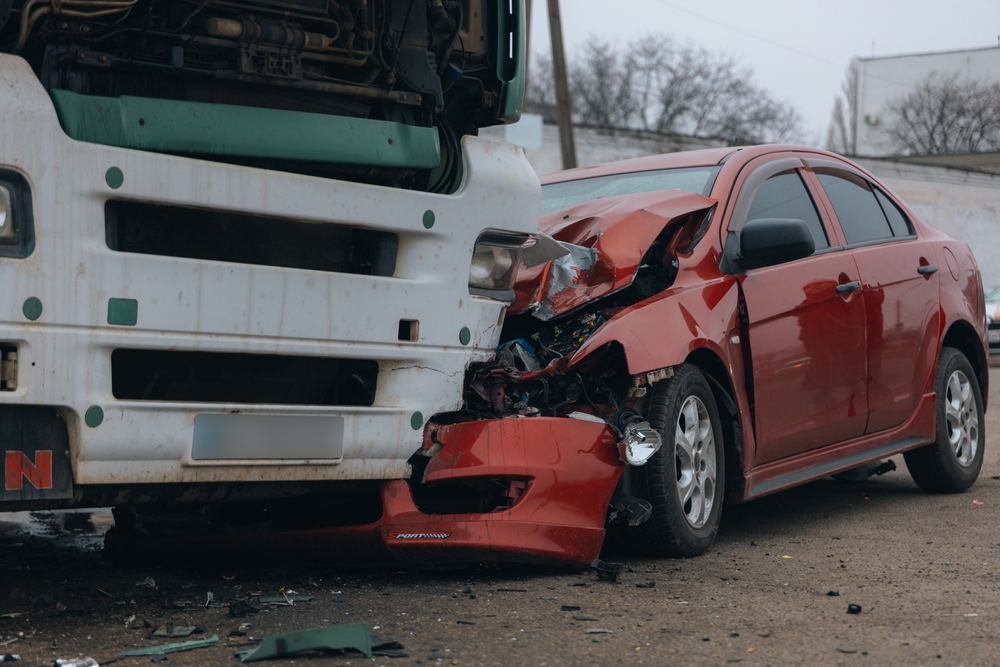
After a car accident, the time that follows can confuse anyone. You are likely dealing with physical pain, vehicle repairs, and calls from insurance companies. While getting medical attention is the top priority, there are steps you can take from home to protect your interests as you begin your recovery.
The Importance of Gathering Information
Once you have addressed your immediate medical needs, organizing the information related to the accident is a very helpful step. This creates a clear record of events and helps you keep track of the many details involved.
- Write Down Everything You Remember: As soon as you are able, write down every detail you can recall about the accident. Note the time of day, the weather, what you saw and heard, and any conversations you had with the other driver or witnesses. Memories can fade, so creating a written record early is beneficial.
- Organize Your Documents: Create a folder to keep all accident-related paperwork in one place. This includes the police report, the other driver's information, photos of the scene and your vehicle, and any correspondence from insurance companies.
- Track Your Recovery and Expenses: Keep a simple journal of your medical appointments, the cost of prescriptions, and any receipts for out-of-pocket expenses. It is also helpful to make notes about how your injuries are affecting your daily life, such as days missed from work or activities you can no longer do.
This documentation provides a comprehensive picture of how the accident has impacted your life, which is essential for any future claim.
How California's Comparative Negligence Rule Works
A common concern people have is whether they can still seek compensation if they think they might have been partially at fault for the crash. California law addresses this with a rule called pure comparative negligence.
This rule means that you can still recover compensation for your injuries even if you were partially responsible for the accident. The amount of compensation you receive simply decreases by your percentage of fault.
This system ensures that accountability is assigned fairly based on each party's contribution to the incident.
The Financial and Physical Impact of a Bakersfield Car Accident

The true cost of a car accident goes far beyond a damaged vehicle. The physical injuries can lead to extensive medical treatment, rehabilitation, and chronic pain. At the same time, the inability to work can create immense financial pressure on you and your family just when you need stability the most.
Calculating the Full Cost of an Accident
In a personal injury claim, the compensation sought is meant to cover all of the losses, or damages, you have suffered because of the accident. These damages are generally broken down into two main categories.
- Economic Damages: These are the tangible, verifiable financial losses you have incurred. They include things like current and future medical bills, lost wages from being unable to work, diminished future earning capacity if you cannot return to your previous job, and vehicle repair or replacement costs.
- Non-Economic Damages: These are the intangible losses that don't have a specific price tag but significantly impact your quality of life. This category includes physical pain and suffering, emotional distress, loss of enjoyment of life, and inconvenience.
A thorough evaluation of both types of damages is necessary to understand the full impact the accident has had on your life.
Why You Shouldn't Accept the First Insurance Offer
Soon after an accident, you will likely be contacted by an insurance adjuster from the at-fault driver's insurance company. It is important to remember that the adjuster's primary role is to resolve the claim for the lowest possible cost to their company. They may seem friendly and helpful, but they are not working for you.
Initial settlement offers are often made quickly, sometimes before the full extent of your injuries is even known. These early offers rarely account for potential future medical needs, the full amount of lost income, or the non-economic damages you have suffered. Accepting a quick settlement may feel like a relief at the moment, but it could leave you without the resources you need for your long-term recovery.
FAQs about Car Accidents in Bakersfield
Here are answers to some common questions people have after being involved in a car accident.
The statute of limitations is a legal deadline for filing a lawsuit. In California, a person generally has two years from the date of the injury to file a personal injury lawsuit related to a car accident. If you miss this deadline, you may lose your right to seek compensation.
If you are hit by a driver who does not have insurance, you may be able to file a claim through your own insurance policy, provided you have Uninsured/Underinsured Motorist (UM/UIM) coverage. This is an optional but highly recommended part of any auto insurance policy in California.
Under California law, you must report any accident to the DMV within 10 days if it resulted in any injury or death, or if the property damage exceeded $1,000. It is also wise to file a police report, as this creates an official record of the incident.
In most rear-end collisions, there is a strong presumption that the driver of the rear vehicle is at fault. This is based on the duty of every driver to maintain a safe following distance. However, there can be exceptions, such as if the front driver braked suddenly for no reason or had non-working brake lights.
Yes, you may still be able to recover compensation. However, under California's comparative negligence rule, the amount you recover could be reduced. The other side might argue that your failure to wear a seatbelt contributed to the severity of your injuries, and a court may assign you a percentage of fault for that reason.
What is Tule fog and how does it affect driving conditions?
Tule fog is a dense, ground-hugging fog unique to the Central Valley of California. It often forms during the late fall and winter, typically after a rain. Tule fog can rapidly reduce visibility to near zero, creating extremely dangerous driving conditions that often result in multi-car pileups on major highways like State Route 99 and Interstate 5. Drivers must slow their speed immediately and use low-beam headlights when visibility diminishes.
What should I do if the other driver leaves the scene of the accident?
A driver who leaves the scene of an accident after causing injury or property damage commits a crime in California.
Your first priority remains safety and medical attention. If you can do so safely, note the other vehicle's license plate number, make, model, and color. Report the incident to the police and your insurance company immediately.
If you have Uninsured/Underinsured Motorist (UM/UIM) coverage, it typically protects you in these situations.
Let the Law Offices of Mickey Fine Fight for You
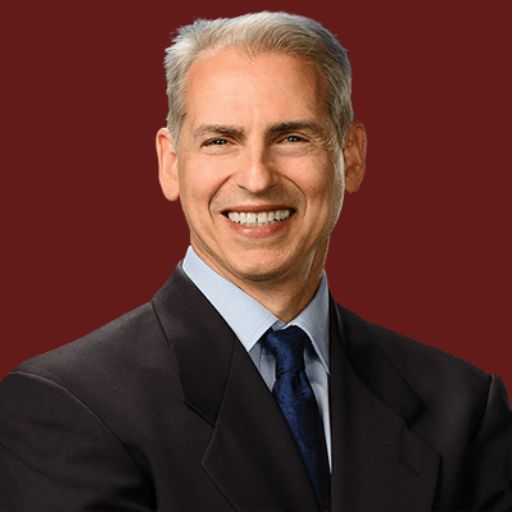
When you're recovering from an injury caused by a car accident, you need a dedicated legal advocate on your side. At the Law Offices of Mickey Fine, we have been helping injured people in Bakersfield and Kern County for over 30 years. Mickey Fine will personally oversee every part of your case, holding the responsible parties accountable and fighting for the full and fair compensation you need to move forward.
We understand the physical, emotional, and financial challenges you are facing. Our commitment is to provide you with personalized attention and aggressive representation. We are prepared to take your case to trial if a fair settlement cannot be reached. We handle all personal injury cases on a contingency fee basis, which means you pay no fees unless we win your case. It costs nothing to see how we can help. Contact the Law Offices of Mickey Fine today for a free and confidential consultation to discuss your case.