Driving along Highway 99 or the I-5 in Kern County, you share the road with large commercial trucks every day. When a truck’s cargo spills onto the road, it can create an incredibly dangerous situation, leading to serious accidents. If you’ve been injured by fallen cargo, you might be asking, “Who is liable when a cargo spill causes an accident?” The answer is often more complex than it seems, as liability, or legal responsibility, can fall on several different parties, including the truck driver, the trucking company, or the company that loaded the cargo.
Schedule A Free Case Consultation
Key Takeaways about Liability after a Cargo Spill Accident
- Determining who is at fault in a cargo spill accident often requires an in-depth investigation into the actions of the driver, trucking company, and cargo loaders.
- Liability frequently stems from negligence, such as failing to properly secure or inspect the cargo according to safety standards.
- Both federal and state laws impose strict rules on how commercial cargo must be loaded, balanced, and secured for transport.
- Evidence from the scene, including photos of the spilled cargo and vehicle damage, as well as police and company records, can be vital for a claim.
- Multiple parties may share responsibility for an accident caused by unsecured cargo, making these cases particularly complex.
Understanding Liability in a Truck Cargo Spill Accident
When cargo falls from a truck and causes a collision, determining who is at fault is the first step toward getting compensation for your injuries. This process centers on two key legal ideas: liability and negligence.
- Liability simply means legal responsibility for causing harm to another person. In a cargo spill case, the goal is to identify which person or company is legally responsible for the damages you suffered.
- Negligence is the failure to use reasonable care to prevent harm. Most personal injury cases are based on proving that someone was negligent. For a cargo spill, negligence could mean a driver didn't check their load, a company used worn-out straps, or a loader improperly balanced the weight in the trailer. If this failure directly caused your injuries, that party could be held liable.
Imagine a truck carrying agricultural equipment loses a piece of machinery on the Grapevine, causing a multi-car pileup. An investigation might show the loading company didn't secure it properly and the driver never performed a required pre-trip inspection. In this case, both the loading company and the trucking company could be considered negligent and therefore share liability for the accident.
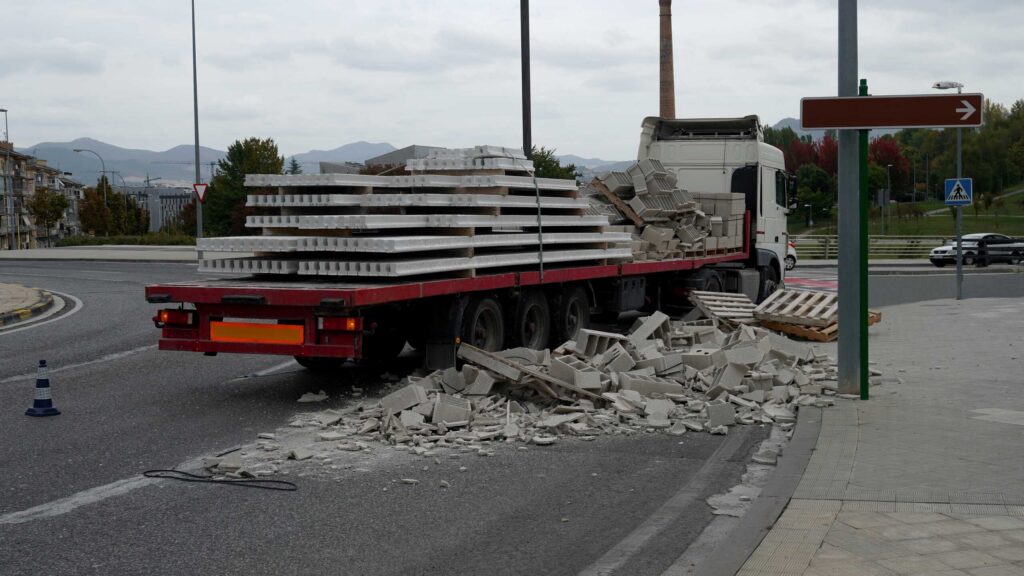
Who Could Be Held Responsible for a Cargo Spill?
Unraveling who is liable when a cargo spill causes an accident involves looking at everyone involved in the chain of transportation. Unlike a typical car crash with just two drivers, a cargo spill can involve multiple businesses and individuals who had a duty to ensure the load was safe.
The Truck Driver's Responsibility
The truck driver is on the front lines of cargo safety. They are not just responsible for driving the truck but also for making sure the load they are hauling is secure throughout their journey. Federal and state regulations place specific duties on drivers.
- Pre-Trip Inspections: Drivers must inspect their cargo before starting a trip to make sure it's properly distributed and secured.
- Periodic Inspections: During a trip, drivers are required to re-check their cargo and securement devices within the first 50 miles and then again whenever they take a break or every 3 hours/150 miles, whichever comes first.
- Safe Driving Practices: Drivers must operate their vehicles safely, as aggressive maneuvers, speeding, or sharp turns can cause even a well-secured load to shift and fall.
If a driver skips these inspections or drives recklessly, their carelessness could be a direct cause of the accident, making them personally negligent.
The Trucking Company's Liability
The company that owns the truck and employs the driver (the motor carrier) also has significant responsibilities. Under a legal principle called vicarious liability, an employer can often be held responsible for the negligent actions of its employees while they are on the job.
The trucking company’s duties extend beyond the driver’s actions and include:
- Proper Hiring and Training: They must hire qualified drivers and provide thorough training on safety procedures, including cargo securement.
- Vehicle and Equipment Maintenance: The company is responsible for maintaining its trucks, trailers, and all securement equipment, like straps, chains, and binders, in safe working condition.
- Compliance with Regulations: They must ensure their operations comply with all safety regulations set by the Federal Motor Carrier Safety Administration (FMCSA).
If a company pressures its drivers to skip inspections to save time or fails to replace old, frayed tie-downs, its negligence contributes to the danger on the road.
The Cargo Shipper or Loader's Role in Liability
Sometimes, the driver and trucking company aren’t the ones who physically load the trailer. Many businesses hire a separate company to load the goods. These shippers or loaders have a duty to load, block, and brace the cargo correctly.
If they fail in this duty, they can also be held liable. For example, if a company loading pipes onto a flatbed in a Bakersfield industrial park doesn't balance the weight correctly, it can make the truck dangerously unstable and lead to a spill, even if the driver does everything right. Proving the loader's fault is a key part of the investigation into who is liable when a cargo spill causes an accident.
The Rules of the Road: Federal and California Cargo Securement Laws
To keep our roads safe, both the federal government and the state of California have created detailed rules for securing cargo. These regulations are not suggestions; they are the law. When these rules are broken, it often serves as strong evidence of negligence.
The Federal Motor Carrier Safety Administration (FMCSA) provides a comprehensive set of cargo securement rules that all interstate commercial trucks must follow. These rules detail the proper use of tie-downs, the minimum number of straps required for cargo of a certain length and weight, and specific requirements for unique items like logs, boulders, and heavy equipment.
California also has its own laws. For example, the California Vehicle Code § 24002 states that it is unlawful to operate any vehicle that is in an unsafe condition or that is not safely loaded.
A violation of these safety statutes can be a powerful indicator of fault. An investigation may uncover that a trucking company used fewer tie-downs than required by the FMCSA, which directly led to the cargo breaking loose. This violation can help establish who is liable when a cargo spill causes an accident.
What Causes Cargo to Spill onto Bakersfield Roads?
Cargo spills are almost never truly "accidents" in the sense that they are unavoidable. They are usually the result of a failure at some point in the transportation process. Understanding these causes helps pinpoint who was negligent.
- Improper Loading: If cargo is not distributed evenly, it can make the truck top-heavy or unstable. A poorly stacked load can collapse and burst through the sides of a trailer.
- Inadequate Securement: This is one of the most common causes. It includes using too few tie-downs, using old or damaged straps that can snap, or failing to use the correct type of securement device for the load.
- Driver Error: A driver who takes a turn on an off-ramp from Highway 58 too quickly or brakes too hard can cause the forces on the cargo to exceed the strength of the tie-downs.
- Equipment Failure: A faulty trailer latch, a defective winch, or a rusted chain can all fail under pressure. This can be the fault of the trucking company for poor maintenance or, in some cases, the manufacturer of the part.
Each of these potential causes points to a different party who may be responsible for the harm you have suffered. A thorough investigation is the only way to determine the specific chain of events that led to the spill.
Steps to Take After an Accident Caused by Fallen Cargo
Once you have received emergency medical care, the situation can feel confusing. While your primary focus should be on your physical recovery, there are a few things you can do to help document what happened.
- Write Down Everything You Remember: As soon as you are able, write down every detail you can recall about the accident. Note the time of day, weather conditions, what you saw, and the sequence of events. Memories can fade, so creating a record early is helpful.
- Organize Your Documents: Keep all paperwork related to the accident in one place. This includes the police report, medical bills, receipts for prescriptions, and any letters you receive from insurance companies.
- Document Your Injuries: Take photos of your physical injuries as they heal. It can also be beneficial to keep a simple journal detailing your pain levels, medical appointments, and how the injuries are affecting your daily life.
- Preserve Evidence: Do not repair your vehicle until it has been inspected and photographed. The damage to your car can provide important clues about the impact and what happened.
Taking these steps can help create a clear record of the incident and its effect on your life, which is valuable information for any future claim.
How Is Compensation Determined in a Cargo Spill Case?
If you were injured due to someone else’s negligence, you may be entitled to compensation for your losses. This compensation, legally called "damages," is intended to help you recover financially and acknowledge the physical and emotional hardship you’ve endured. Damages are typically broken down into two categories.
Economic Damages
These are the measurable financial losses you have suffered because of the accident. They are meant to reimburse you for out-of-pocket costs.
- Medical Expenses: This covers everything from the initial ambulance ride and emergency room visit to ongoing physical therapy, future surgeries, and necessary medications.
- Lost Wages: If you were unable to work while recovering, you can be compensated for the income you lost.
- Diminished Earning Capacity: If your injuries are permanent and prevent you from returning to your old job or earning the same amount of money, you may be compensated for this future loss of income.
- Property Damage: This includes the cost to repair or replace your vehicle and any other personal property damaged in the crash.
Non-Economic Damages
These damages are meant to compensate you for the non-financial, personal losses that are harder to put a price on but are just as real.
- Pain and Suffering: Compensation for the physical pain and emotional distress caused by your injuries.
- Loss of Enjoyment of Life: If your injuries prevent you from participating in hobbies, activities, or family life that you once enjoyed.
- Emotional Distress: This can include anxiety, fear, or depression stemming from the traumatic experience of the accident.
An experienced truck accident attorney can help evaluate all of your losses to build a comprehensive picture of the compensation you may need to move forward.
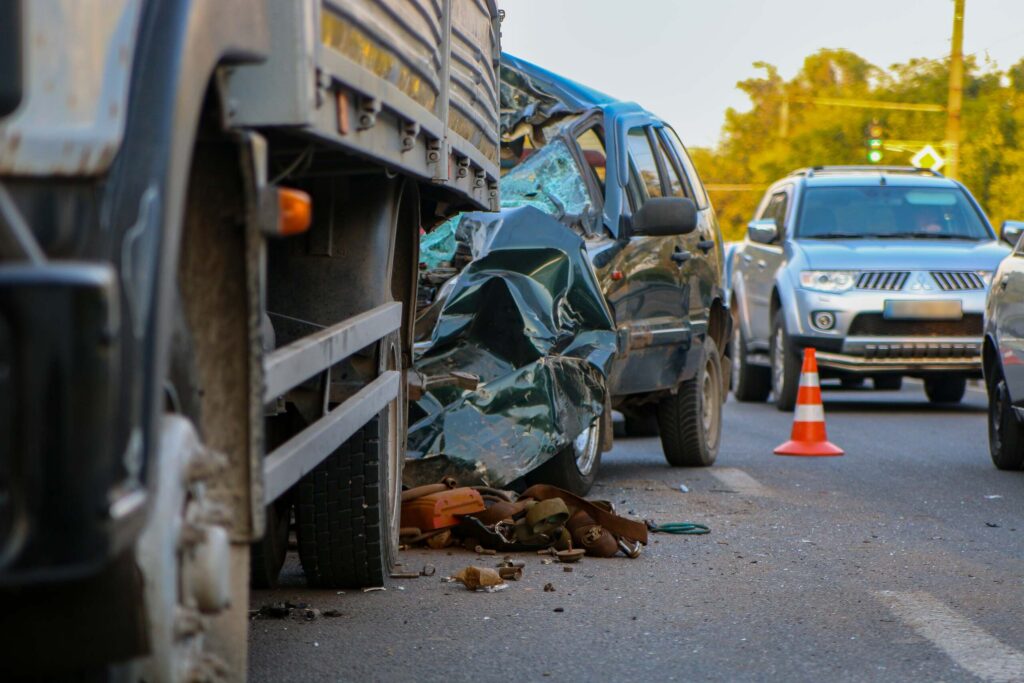
Cargo Spill Causes Accident FAQs
What if the truck that dropped the cargo drove away?
This is treated as a hit-and-run accident. Your own auto insurance policy may provide coverage through your Uninsured/Underinsured Motorist (UM/UIM) protection. It is also critical to report the incident to the police immediately, as they may be able to locate the truck using traffic cameras or witness information.
How long do I have to file a claim for a cargo spill accident in California?
In California, the statute of limitations for filing a personal injury lawsuit is generally two years from the date of the injury. This deadline is strict, and if you miss it, you may lose your right to seek compensation.
Can I be found partially at fault for the accident?
California follows a "pure comparative negligence" rule. This means that if you are found to be partially at fault for the accident (for example, if you were speeding at the time), your compensation can be reduced by your percentage of fault. However, you are not barred from recovering damages entirely.
Does the type of cargo that spilled affect the case?
Yes, it can. If the spilled cargo was a hazardous material, the case can become more complex, as there are additional federal and state regulations for transporting dangerous goods. Spills involving gravel, lumber, or heavy machinery each present unique challenges for evidence collection and proving how the spill occurred.
What kind of evidence is most important in a fallen cargo case?
Physical evidence is crucial. This includes photos and videos of the accident scene, the spilled cargo, and the damage to all vehicles. Witness statements, the official police report, and the trucking company's own records—such as driver logs, inspection reports, and maintenance files—are also extremely important for building a strong case.
The Law Offices of Mickey Fine Will Fight for You
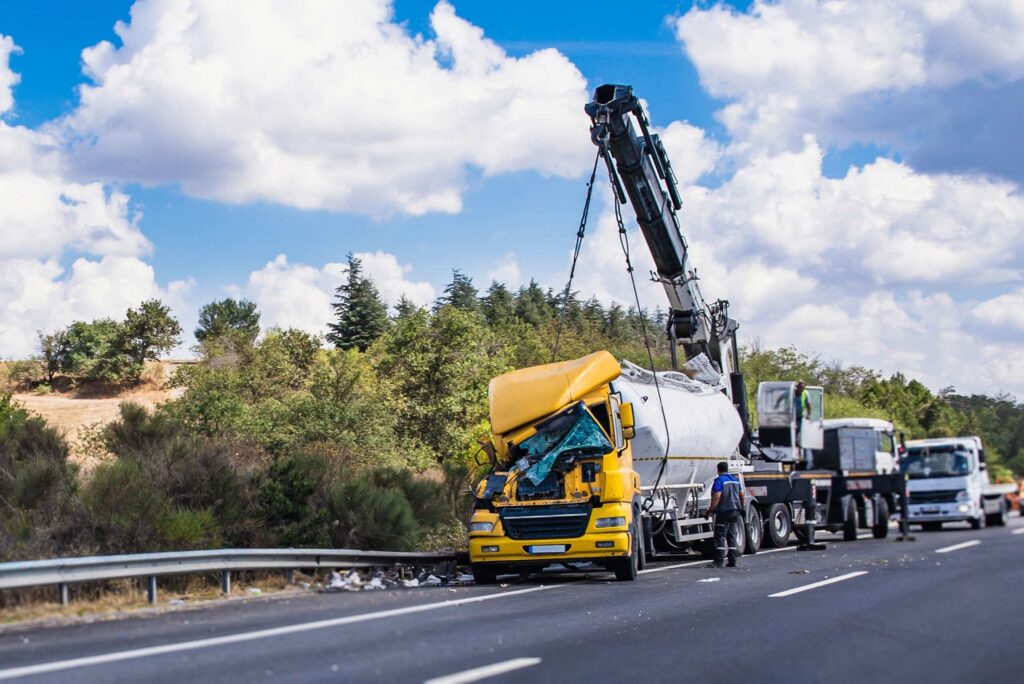
Determining who is liable when a cargo spill causes an accident requires a deep understanding of trucking regulations and a thorough investigation into the facts. The trucking and insurance companies have teams of people working to protect their interests, and you deserve to have a dedicated advocate on your side.
At the Law Offices of Mickey Fine, we have been helping injured people in Bakersfield and across Kern County for over 30 years. We understand the devastating impact a serious truck accident can have on your life. Mickey Fine will personally oversee your case, dedicating the time and resources needed to hold the responsible parties accountable. We are committed to fighting for the full and fair compensation you need to recover and rebuild.
It costs nothing to see if we can help. Contact the Law Offices of Mickey Fine today for a free, no-obligation consultation to discuss your case.