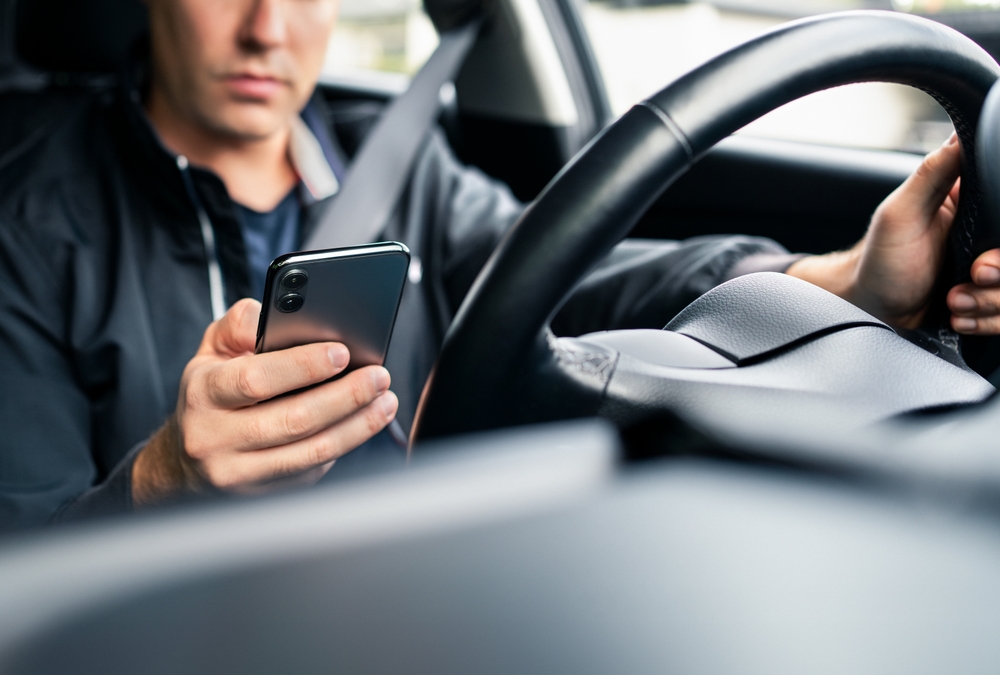
You cannot use a cell phone at a red light in California, with very few exceptions. California law prohibits drivers from holding and using a cellphone or similar electronic device while operating a vehicle, a rule that applies even when you are stopped at a red light.
Many drivers think a temporary stop pauses their driving responsibilities, but the law views it differently. This confusion can lead to costly citations and complicate a personal injury claim if a crash occurs.
Key Takeaways for Can I Use My Cellphone at a Red Light in California?
- California’s hands-free laws apply even when your vehicle is stationary at a red light, stop sign, or in traffic.
- You may only use a cellphone if it’s mounted and can be operated with a single swipe or tap of the driver’s finger.
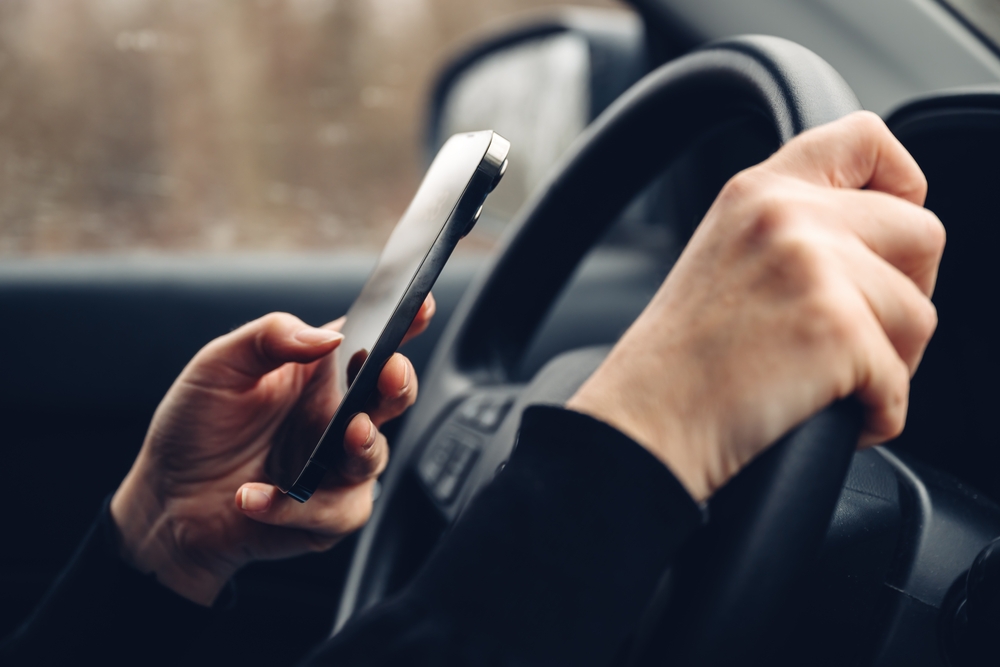
- Holding your phone to talk, text, or use an app while stopped at a red light constitutes a violation.
- A cellphone violation can negatively impact your personal injury claim by introducing an element of comparative negligence.
- Exceptions to the rule are minimal and typically apply only to emergency situations or to drivers of authorized emergency vehicles.
California's Distracted Driving Laws Explained
California aggressively combats distracted driving through specific vehicle codes. These laws aim to reduce accidents caused by drivers diverting their attention to electronic devices.
Many motorists believe that a complete stop at an intersection provides a safe harbor to check messages or make a call, but this belief is incorrect and can lead to legal trouble.
The state views a driver at a red light as still actively operating the motor vehicle. The engine is running, the car is in traffic, and the driver must remain alert to changing signals and surrounding hazards.
Therefore, the laws that govern cellphone use while in motion apply equally when you are temporarily stopped.
The Foundation of Hands-Free Driving
California Vehicle Code 23123.5 forms the core of the state's hands-free law. The statute explicitly says that a person shall not drive a motor vehicle while holding and operating a handheld wireless telephone or a wireless electronic communication device.
The law provides a narrow exception, allowing a driver to operate a device with the hand to activate or deactivate a feature or function with a single swipe or tap.
This provision requires the device to be mounted on the vehicle's dashboard, center console, or windshield in a manner that doesn’t obstruct the driver's view. If you hold the phone, you break the law.
Defining Hands-Free Operation
For a device’s use to be legal, it must qualify as hands-free. This means you cannot support the phone with any part of your body. The goal is to keep both of your hands available for steering and other driving functions.
Even at a stop, a driver might need to react suddenly, and having a hand occupied by a phone delays that reaction time.
Common examples of compliant hands-free systems include:
- Dashboard or Console Mounts: Properly mounted holders keep your phone secure and within easy view, allowing a single tap or swipe to start navigation or make a call without holding the device.
- Bluetooth Headsets: Using a single-earpiece Bluetooth headset is permitted in California. The other ear must remain uncovered so you can hear surrounding traffic, emergency vehicles, and horns.
- Integrated Vehicle Systems: Many newer vehicles feature built-in Bluetooth and voice-command technology that syncs with your phone, offering a safe and compliant way to communicate while driving.
- Speakerphone Functionality: If your vehicle doesn’t have Bluetooth, you can still comply by activating the speakerphone before driving and placing your phone in a mounted or secure, easily reachable spot.
Limited Exceptions to the Cellphone Law
The law does provide a few very specific exceptions where a driver may use a handheld phone. However, these situations are rare and do not typically apply to driving scenarios at a red light. Simply waiting for the light to turn green doesn’t qualify as an emergency.
These narrow exceptions include the following scenarios:
- Emergency Communications: A driver can use a handheld device to contact law enforcement, a fire department, or emergency medical services during an emergency.
- Authorized Emergency Vehicles: Operators of authorized emergency vehicles, such as police cars and ambulances, can use a device as part of their official duties.
- Utility and Government Vehicles: Certain government and utility workers may have exemptions when operating their vehicles in the course of their work.
How a Cellphone Violation Affects Your Injury Claim
If you suffered an injury in a car crash, any evidence of cellphone use can complicate your ability to recover compensation. The other driver’s insurance company will search for any reason to assign you a percentage of the fault for the collision.
Proof that you were on your phone, even while stopped, provides them with powerful ammunition to argue that your inattention contributed to the accident. Your personal injury attorney builds a case to counteract these strategies and demonstrate the other party’s primary liability.
Even a rear-end collision, which typically involves clear fault for the striking driver, can become complex. An insurer may argue that if you had been paying attention instead of being on your phone, you may have been able to take evasive action to lessen the impact or avoid the crash altogether.
Understanding California's Comparative Fault Rule
California follows a pure comparative negligence rule. This legal doctrine allows a person to recover damages even if they were partially at fault for the accident that caused their injuries.
Insurers and attorneys first investigate the evidence and negotiate to assign a percentage of fault to each party involved. If they cannot agree on fault and the case proceeds to a lawsuit, then a judge or jury assesses the evidence and assigns the final percentages of fault.
The court then reduces your total compensation award by your percentage of fault. For example, if the court awards you $100,000 for your injuries but finds you 5% at fault because you were looking at your phone at a red light, you would receive $95,000.
How Insurers Leverage Comparative Negligence
Insurance companies often leverage the comparative fault rule to reduce the amount they pay on claims. They may argue that because you were holding your phone, your awareness was diminished, making you partially responsible for the crash.
An experienced personal injury attorney is familiar with these tactics. Your lawyer will work to gather evidence that minimizes your percentage of fault while maximizing the other driver's.
Their goal is to demonstrate that your actions were minor compared to the negligent behavior of the person who caused the collision.
Why Using a Cellphone Is Dangerous at a Red Light
Drivers often underestimate the risks of using a phone while stopped, but an intersection is a dynamic environment. The situation can change in a split second, and a distracted driver cannot react in time to protect themselves or others.
These moments of inattention create predictable and preventable hazards for everyone on the road.
Common examples of these dangers include:
- Delayed Traffic Flow: A driver absorbed by their screen fails to notice the light change to green, disrupting the flow of traffic and prompting impatient maneuvers from other motorists.
- Slowed Hazard Response: A driver looking at a phone cannot react to an approaching emergency vehicle, a pedestrian entering the crosswalk unexpectedly, or a nearby vehicle losing control.
- Unintended Vehicle Movement: A distracted driver may relax their foot on the brake, causing their car to roll forward into another vehicle or a crosswalk.
- Misread Traffic Signals: A driver, glancing up from their phone, may mistakenly see a green light from another lane and accelerate into cross-traffic.
- Mistaken Turning Maneuvers: A motorist in a dedicated turn lane might miss their protected green arrow and, upon seeing the adjacent traffic move, proceed with their turn directly into oncoming vehicles.
- Vulnerability to Rear-End Crashes: While a stopped driver is usually not at fault for a rear-end collision, a lawyer for the other driver might argue your distraction prevented you from taking a defensive action, like moving forward slightly if you saw the car approaching too fast in your rearview mirror.
These scenarios show why lawmakers treat a car at a red light the same as a car in motion. Full situational awareness is a driver's primary responsibility at all times. Failing to maintain that focus exposes you to physical harm and significant legal liability.
FAQ for Can I Use My Cellphone at a Red Light in California?
Can You Talk on Speakerphone While Driving in California?
Yes, you can talk on your speakerphone while driving as long as you’re not holding the phone. The law allows this because it fits the definition of hands-free use.
To comply with the law, you may need to activate the speakerphone with a single tap or swipe, and the phone should be securely mounted or placed in a location where it can be operated without requiring your hands.
What Are the Penalties for a Hands-Free Violation?
A first-time conviction for violating California’s hands-free law results in a base fine of $20. Subsequent offenses have a base fine of $50. However, penalty assessments, fees, and court costs significantly increase the total amount you pay, often reaching several hundred dollars.
Additionally, a conviction for this violation may add a point to your driving record, which can lead to higher insurance premiums.
Can the Police Pull Me Over if They Just Suspect I'm Using My Phone?
Yes, a police officer can initiate a traffic stop if they have a reasonable suspicion that you’re violating the hands-free law. An officer observing you looking down at a device in your lap or holding a phone to your ear provides enough cause to pull you over.
Their direct observation of you holding and operating the device is sufficient evidence for a citation.
Can Your Phone Records Be Used Against You for a Traffic Ticket?
It’s unlikely that prosecutors would subpoena phone records for a simple traffic infraction due to privacy concerns and the complexity of the process. However, in a personal injury lawsuit following a serious accident, your attorney or the opposing counsel can subpoena these records to establish whether you were actively using your phone at the moment of the crash.
Does Being at a Red Light Change the Cellphone Rules?
No, being at a red light doesn’t change the rules regarding handheld cellphone use in California. The law considers a driver stopped in traffic to still be operating the vehicle.
You must remain off your handheld device until you have moved your vehicle to a lawful parking space and are no longer in the flow of traffic. The engine doesn’t need to be turned off for you to use your phone legally, but the vehicle must be parked.
Focus on Your Future
Taking control of your legal claim is the first step toward securing the resources you need after a car accident. If you have questions about your rights after a car crash, the team at the Law Offices of Mickey Fine can help you understand your options and protect your future.
Recovering from a car accident involves more than just physical healing. It requires building a path forward to regain financial stability and peace of mind. Framing your next steps not as a reaction to a past event but as a proactive plan for your future can empower you.
Call the Law Offices of Mickey Fine at (661) 333-3333 today for a free consultation.