After a car crash, you’ll hear many different terms, and one of the most confusing is “no-fault.” Understanding what no-fault car accidents are is critical because it directly impacts how you get compensation for your injuries and vehicle damage—something a car accident lawyer often helps clarify when insurance rules become confusing.
While some states follow a no-fault system, California does not. Here in Bakersfield, we operate under an "at-fault" system, which means the person responsible for causing the collision is also responsible for the costs.
Key Takeaways about What You Need to Know about No-Fault Car Accidents
- This post clarifies the difference between "no-fault" and "at-fault" car insurance systems.
- California is an "at-fault" state, meaning the party who caused the accident is financially responsible for the damages.
- Determining fault involves collecting evidence such as police reports, witness statements, and photos from the scene.
- California's "comparative negligence" rule means a person can still recover damages even if they were partially responsible for the accident.
- Compensation in an at-fault claim can cover both economic losses like medical bills and non-economic damages like pain and suffering.
- Navigating an at-fault claim often involves complex communications with insurance companies.
The "No-Fault" vs. "At-Fault" Distinction: A Clear Breakdown

It’s easy to get these two terms mixed up, but they represent two very different ways of handling car accident claims. Understanding the system used here in California is the first step toward protecting your rights.
A no-fault system, used in about a dozen other states, means that after an accident, your own insurance policy pays for your initial medical expenses and certain other losses, up to a specific limit. This is done regardless of who caused the crash. The idea is to provide quick payment for injuries without having to go through a lengthy process of proving who was to blame. In this system, your ability to sue the other driver is often restricted unless your injuries are considered "serious."
California, on the other hand, uses an at-fault system, sometimes called a "tort" system. This means that if you are injured in a car accident, the person who was negligent—or careless—is responsible for paying for your damages. To get compensation, you (or your attorney) must file a claim against the at-fault driver and their insurance company.
Here’s a simple comparison of the two systems:
- Who Pays for Injuries: In a no-fault state, your own insurance company pays first. In an at-fault state like California, the responsible driver's insurance company pays.
- Proving Blame: In a no-fault state, proving blame isn't necessary for your initial medical benefits. In an at-fault state, proving the other driver was at fault is essential to your claim.
- Right to Sue: No-fault states limit your right to sue the other driver. At-fault states allow you to pursue a claim for the full extent of your damages against the responsible party.
This fundamental difference is why understanding California’s specific laws is so important after a collision in Bakersfield.
Why California is an "At-Fault" State and What It Means for You
California law is clear: drivers are financially responsible for the damages they cause. The state's Financial Responsibility Law requires all drivers to carry liability insurance to cover potential damages they might inflict on others. When an accident happens, this at-fault principle kicks in.
For you, this means if another driver’s actions caused your accident on Rosedale Highway or the Westside Parkway, you have the right to seek compensation from them. But this right comes with a responsibility: you must be able to prove they were at fault. This is done by showing they were negligent.
Negligence is a legal term that simply means someone failed to act with reasonable care, causing harm to another person. To prove negligence in a car accident claim, you generally need to show four things:
- Duty of Care: The other driver had a legal duty to operate their vehicle safely and follow traffic laws. Every driver on the road has this duty.
- Breach of Duty: The driver failed in that duty. This could mean they were speeding, texting while driving, ran a red light, or made an unsafe lane change.
- Causation: The driver's breach of duty directly caused the accident and your injuries. For example, because they ran a red light, they T-boned your car in an intersection.
- Damages: You suffered actual harm as a result. This includes medical bills, lost income, vehicle damage, and pain and suffering.
Proving these four elements is the key to a successful at-fault car accident claim in Bakersfield.
How is Fault Determined After a Car Accident in Bakersfield?
Since proving fault is so important in California, collecting evidence is a critical part of the process. Insurance companies and lawyers look at all available information to piece together what happened and determine who was responsible. You don’t have to figure this out on your own, but it helps to know what kind of evidence is valuable.
Several key pieces of evidence are often used to establish fault:
- The Police Report: While not always admissible in court, the police report contains the investigating officer's observations, diagrams of the scene, and sometimes their initial opinion on who violated a traffic law.
- Witness Statements: Independent witnesses who saw the accident can provide an unbiased account of events, which can be very powerful.
- Photos and Videos: Pictures of the vehicle damage, skid marks on the road, traffic signals, and the general accident scene can tell a story. Dashcam or nearby security camera footage is even better.
- Vehicle Damage: The location and severity of the damage to the cars involved can often help accident reconstruction professionals understand how the collision occurred.
- Traffic Laws: Citing the specific vehicle code the other driver violated (like speeding or an illegal turn) is a direct way to show a breach of duty.
What if You Were Partially at Fault?
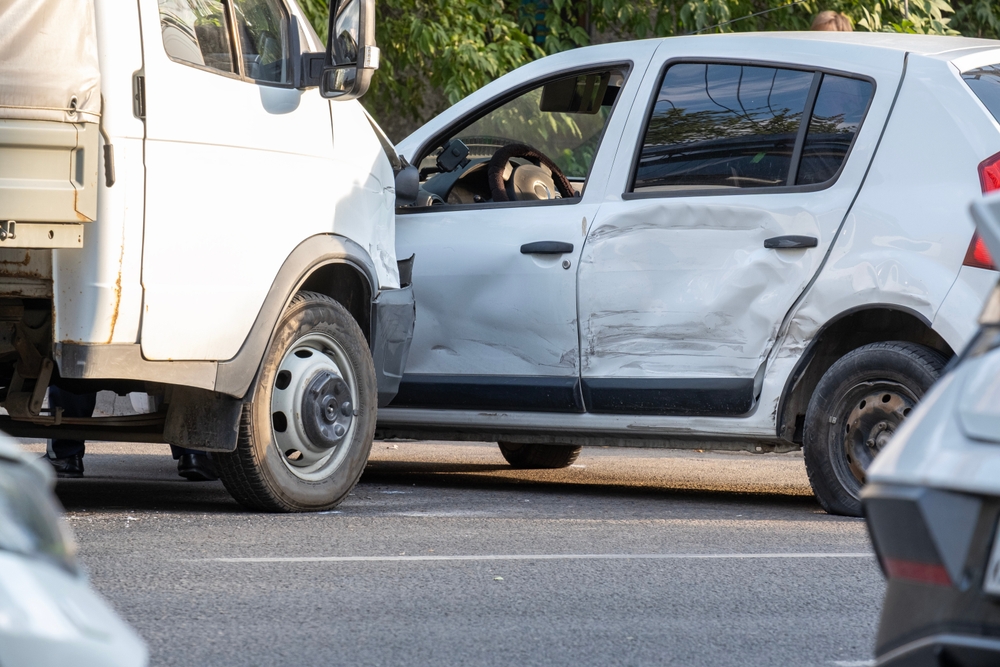
California follows a legal rule called pure comparative negligence. This is a very important concept. It means you can still recover compensation even if you were partially at fault for the accident. However, your total compensation will be reduced by your percentage of fault.
For example, let's say another driver ran a stop sign and hit you, but you were driving 10 miles per hour over the speed limit. A jury might decide the other driver was 80% at fault and you were 20% at fault. If your total damages were $100,000, you could still recover $80,000 (your total damages minus your 20% share of the fault).
California’s comparative negligence rule ensures that a person isn't completely barred from receiving help just because they made a small mistake.
The Role of Insurance Companies in At-Fault Claims
After an accident, you will be dealing with insurance companies—both your own and the other driver's. While your own insurance company may help with things like vehicle repairs (if you have collision coverage), the main negotiation will be with the at-fault driver's insurance provider.
The insurance adjuster for the other driver works for their company, not for you. Their goal is to resolve the claim for the lowest amount possible. They might try to argue that their driver wasn't at fault, that your injuries aren't as serious as you say, or that you were more to blame for the accident than you really were.
When you speak with an insurance adjuster, it is important to be prepared.
- Stick to the Facts: Only provide basic factual information about what happened. Do not guess, speculate, or admit any fault.
- Decline a Recorded Statement: You are generally not obligated to give a recorded statement to the other party's insurance company. These can be used to find inconsistencies in your story later. It's often best to consult with an attorney before agreeing to one.
- Don't Accept the First Offer: The first settlement offer is often far lower than what your claim is actually worth. It is a starting point for negotiation.
- Keep Records of Everything: Document all your medical appointments, track your missed work days, and keep receipts for any accident-related expenses.
Managing communications with insurance companies can be a difficult process, especially when you are trying to recover from injuries.
What Types of Compensation Can You Pursue in an At-Fault Claim?

In a successful at-fault claim, the compensation you can receive is meant to make you "whole" again, at least financially. This compensation, called "damages," is typically broken down into two main categories: economic and non-economic.
Economic Damages: Covering Your Financial Losses
Economic damages are the straightforward, calculable financial losses you have incurred because of the accident. The goal is to reimburse you for every dollar you have lost or had to spend.
- Medical Expenses: This includes everything from the initial ambulance ride and emergency room visit to ongoing physical therapy, surgeries, medications, and any future medical care you may need.
- Lost Wages: If you were unable to work while recovering, you can be compensated for the income you lost during that time.
- Loss of Future Earning Capacity: If your injuries are permanent and prevent you from returning to your previous job or working at the same capacity, you can seek damages for this diminished ability to earn a living.
- Property Damage: This covers the cost to repair or replace your vehicle and any other personal property that was damaged in the crash.
These damages are supported by bills, receipts, and employment records to show a clear financial cost.
Non-Economic Damages: Acknowledging Your Personal Suffering
Non-economic damages are meant to compensate you for the real but non-financial ways the accident has affected your life. These losses are more subjective but are just as important.
- Pain and Suffering: This compensates you for the physical pain, discomfort, and emotional distress you have experienced as a result of your injuries.
- Emotional Distress: A serious accident can cause significant mental and emotional challenges, such as anxiety, depression, or post-traumatic stress disorder (PTSD).
- Loss of Enjoyment of Life: This applies if your injuries prevent you from participating in hobbies, activities, or life experiences that you previously enjoyed.
- Disfigurement or Scarring: Compensation can be sought for permanent physical changes that affect your appearance and confidence.
Calculating these damages is more complex, but they are a crucial part of ensuring you receive fair compensation for the full impact of the accident on your life.
Do I Still Need a Lawyer if the Other Driver Was Clearly At Fault?
This is a question many people in Bakersfield ask. It might seem that if the other driver got a ticket or admitted fault at the scene, the process should be simple. Unfortunately, that is not always the case. Even when liability seems clear, an insurance company may still dispute the value of your claim.
An experienced car accident attorney can be a strong advocate for your interests and manage the complexities of the legal process so you can focus on your recovery.
Here are a few ways a lawyer can assist you:
- Conducting a Thorough Investigation: An attorney can gather all the necessary evidence, including witness statements, police reports, and even hire accident reconstruction professionals if needed to build a strong case.
- Calculating Your Total Damages: It is difficult to know the true value of your claim, especially when considering future medical needs and non-economic damages. An attorney can help you assess the full, long-term cost of your injuries.
- Handling All Insurance Company Communications: A lawyer will take over all negotiations with the insurance adjuster, protecting you from tactics designed to get you to settle for less than you deserve.
- Taking Your Case to Court if Necessary: While most cases settle out of court, if the insurance company refuses to make a fair offer, an attorney will be prepared to file a lawsuit and fight for you at trial.
Having a legal professional on your side levels the playing field and sends a message to the insurance company that you are serious about receiving fair compensation.
No-Fault Car Accident FAQs
Here are answers to some common questions people have about car accident claims in California.
What if the at-fault driver doesn't have insurance?
If you are hit by an uninsured or underinsured driver, you may still be able to recover compensation through your own insurance policy, provided you have Uninsured/Underinsured Motorist (UM/UIM) coverage. This is an optional but highly recommended part of any auto insurance policy in California.
How long do I have to file a car accident claim in California?
In California, the statute of limitations—the deadline for filing a lawsuit—for a personal injury claim is generally two years from the date of the accident. For property damage claims, the deadline is typically three years. It is crucial to act well before this deadline expires.
Should I give a recorded statement to the other driver's insurance company?
It is generally not in your best interest to provide a recorded statement to the opposing insurance company without first speaking to an attorney. Adjusters are trained to ask questions that may lead you to unintentionally hurt your own claim.
Will my health insurance cover my injuries after a car accident?
Yes, you can use your health insurance to pay for your medical treatment after a car crash. However, if you later receive a settlement from the at-fault party, your health insurance company may have a right to be reimbursed for the amounts they paid. This process is called subrogation.
What is MedPay coverage and should I use it?
Medical Payments Coverage, or MedPay, is optional insurance that covers medical expenses for you and your passengers after an accident, regardless of fault. It can be very helpful for covering immediate costs like co-pays and deductibles before a settlement is reached.
Contact Our Bakersfield Car Accident Attorney Today
Understanding the difference between no-fault and at-fault systems is the first step, but applying that knowledge to your specific situation can be a challenge. If you have been injured in a car accident in Kern County, you don't have to face the insurance companies and legal system on your own.

At the Law Offices of Mickey Fine, we are dedicated to helping people in our Bakersfield community hold negligent parties accountable. With over 30 years of experience, Mickey Fine will personally oversee your case and fight for the full and fair compensation you need to move forward.
We handle every case with a personalized approach and are prepared to go to trial if a fair settlement cannot be reached. It costs nothing to see if we can help, and we work on a contingency fee basis, which means you pay no fees unless we win your case. Contact us today for a free consultation to discuss your rights and options.